
2004 U.S. Point of Sale Nicotine Marketing
Almost 90% of adult smokers started as children or teens. Smoking nicotine is so captivating that 71.7% of teen smokers and 90% of adult smokers are chemically addicted under DSM mental disorder diagnostic standards.
Here in the U.S., the nicotine industry is heavily engaged in building a massive facade of trust and responsibility behind which it's pretty much business as usual. For example, Philip Morris commercials expressly assure young minds that any smoker who does get hooked can simply visit its website and find effective help in quitting.
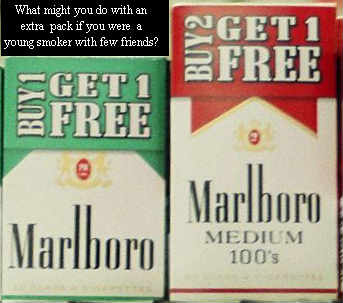
What Philip Morris does not tell them is just how extremely addictive smoking nicotine actually is, how only a couple of cigarettes may be all that's needed to permanently hook them, and how utterly horrible their odds of quitting are when Philip Morris' advice on quitting is actually followed.
When news that the six-month quit smoking rate for quitters using over-the-counter nicotine replacement therapy products is just 7% (March 2003) is coupled with news of massive and widespread NRT study blinding failures (June 2004), it cannot help but leave objective scientists wondering whether the research industry itself became addicted to nicotine.
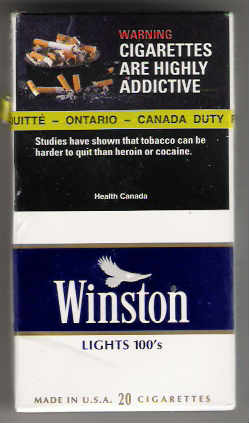
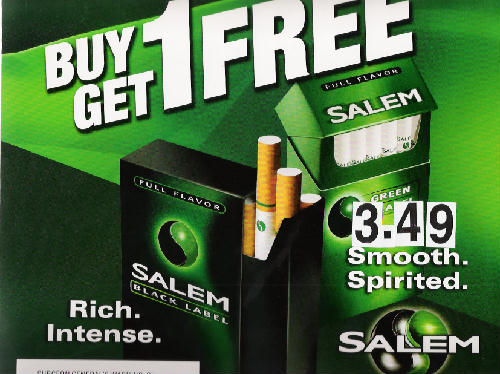
But behind the facade, in neighborhoods around the globe, I doubt you'll find a single sign warning curious adolescent never-smokers that smoking nicotine is highly addictive. Instead, what you'll likely see is youth being urged to steal unearned dopamine by allowing Salem to stir their senses or to feel a nicotine induced adrenaline rush by riding Marlboro's bucking bronco. You will also not find any addiction warning label on any cigarette pack sold in America, as is required in Canada. Sadly, it's almost as if the nicotine delivery industry is waiting on government to compel truth in advertising.


Instead, each time a child walks near or into what they see as the candy store closest to home, their mind is endlessly bombarded with the message that life without tobacco isn't living. It will take bold leadership but such shotgun community marketing can and must end.


In 2003, 132,424 U.S. convenience stores generated $8.8 billion form the sale of nicotine products. According to a 2004 industry report of the National Association of Convenience Stores (NACS), cigarettes account for 34.5% of all in-store sales (compare beer at 10.9%), generating an average income of $304,250 per store. Other non-cigarette tobacco products generate an additional $24,545 per store.
In boasting that its total market share of cigarette sales actually grew from 60% in 2002 to 62% in 2003, the report states that "while Internet and mail-order merchants continue to grow sales, convenience stores were able to hold their sales volume by capturing a greater share of sales from brick-and-mortar retailers." What tactics allow convenience stores to "capture" new smokers in sufficient numbers that they are able to build market share when they also must find replacements for 62% of the 440,000 Americans who annually smoke themselves to death?
It is my hope that a growing collection of WhyQuit "point of sale" dependency prevention pages will have their beginning here. I welcome all input but please understand that unlike other campaigns, this site will not engage in vilifying any person or industry for selling a legal product. What WhyQuit will do is seek to protect youth from the undue influence of reckless store marketing that has absolutely zero regard for the age or maturity of the minds it pierces and enters. What WhyQuit will do is seek to empower citizens across America to demand honest and responsible nicotine marketing that insulates underage minds while allowing young adults to make intelligent decisions.
The primary objective of WhyQuit's "point of sale" education program will be the protection of youth and young adults by: (1) expanding appreciation of the tremendous influence the convenience store industry has in breeding a community climate fertile for chemical enslavement of young minds; (2) exposing the inaccuracy of nicotine marketing that would likely not pass muster under any state's unfair and deceptive trade practices act; (3) teaching how the industry uses its muscle to fight legislation that would afford meaningful protection to our young; and (4) to foster community based activism that isn't afraid to employ the first amendment in order to promote responsible sales practices while educating youth.
A secondary objective will be to motivate the convenience store industry to act responsibly towards the millions of Americans that it helped chemically enslave. It has a moral and equitable obligation to provide effective avenues of escape to those customers wanting to end mandatory nicotine feedings.
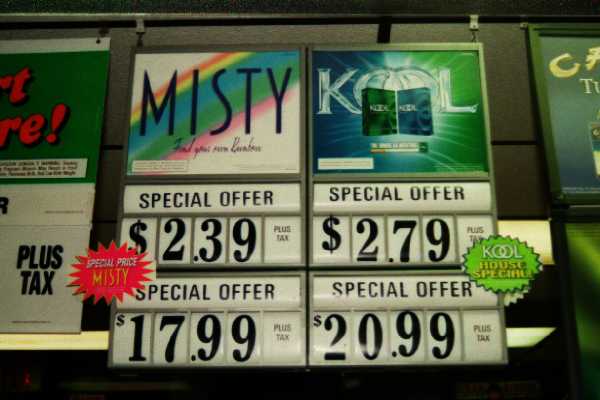
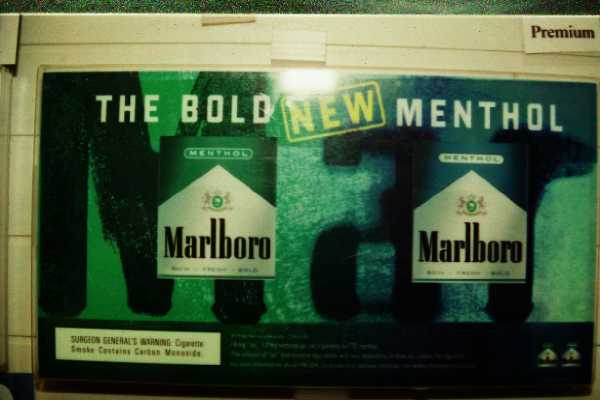
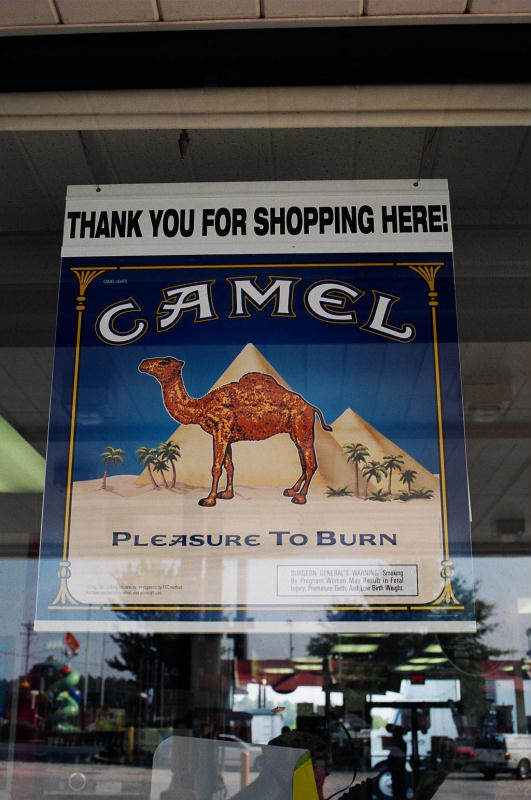
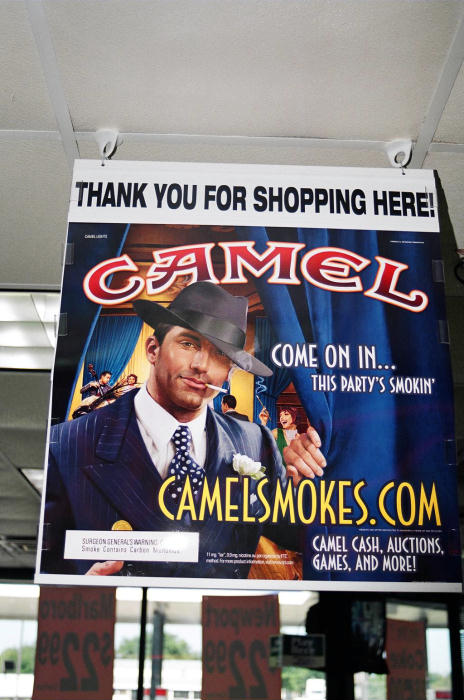
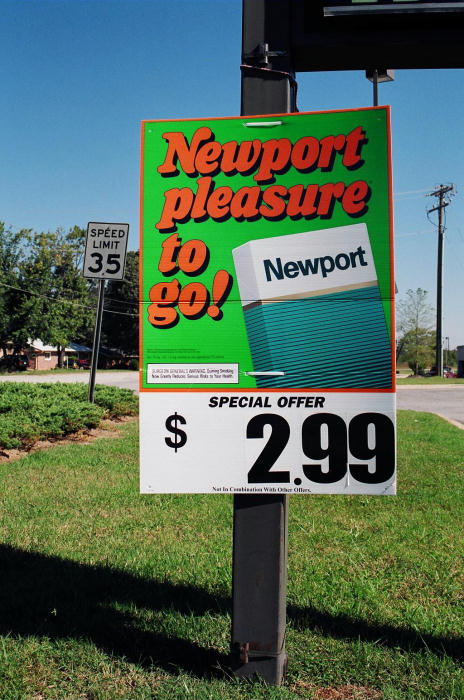
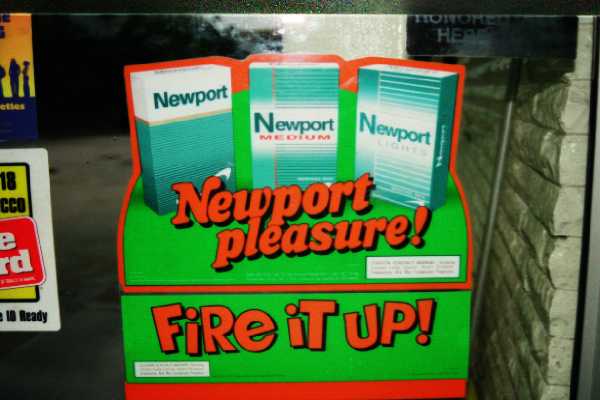
Below are nicotine product marketing photographs taken during the first week of October 2004 in the Carolinas along I-26 from Charleston to Ashville, and on the campus of Western Carolina University. All images and photos may be used by any educator or activist for any non-commercial nicotine dependency prevention or cessation purpose.
E-mail john@whyquit.com if you need a higher resolution image or would like to help grow this collection by submitting and sharing marketing images from your area. You can also mail photos to me, John R. Polito, at 108 Aldrich Place, Goose Creek, SC 29445. If you have any questions I can be reached at (843) 797-3234.

Click on each 2004 image to enlarge







































Related Point-of-Sale Marketing Articles
- WhyQuit's Why Quit on Youth youth and young adult nicotine dependency prevention directory
- Marlboro Maybe Archetype Ad Campaign - Philip Morris International targeting youth for addiction to smoked nicotine.
- Convenience Stores:
Nicotine Addiction Central
- Retail Nicotine Sales Grading Scale
- 100 Reasons Why CVS Should Stop Selling Cigarettes
- 2004 Tracy, California study discovers more intense marketing in stores frequented by youth (study summary only)
- 2003 U.S. study examines how tobacco companies gain prime placement of in-store advertising (free full text in html format)
- 2002 Massachusetts study examines how neighborhood income and ethnic composition impact point of sale marketing (free full text in html format)
- 2001 Britich Medical Journal study in England that examines youth awareness of point-of-sale marketing and finds a 95% awarness rate (free full text in html format)
- 2001 University of N.C. busniess professor examines the "role of slotting fees and trade promotions in shaping how tobacco is marketed in retail stores" (free full text in html format)
- 2002 U.S. study monitored point-of-sale maketing increase following 1999 tobacco billboard ban (free full text in pdf format)
Related Youth Prevention Links
"Kids Just Don't Get It"
Youth Nicotine Dependency Test
Tobacco Ads Trap Teens in School
Time to Boycott Time Inc.
Fall 2004 Magazine Tobacco Ads
Point of Sale Tobacco Marketing
Smoke-Free Movies
How to Quit Smoking
Watch almost 500 additional stop smoking videos
Our Free E-books

Read both & destroy fear driven anxieties!
Discover Smart Turkey Quitting
- WhyQuit.com - WhyQuit is the Internet's oldest forum devoted to the art, science and psychology of cold turkey quitting, the stop smoking method used by the vast majority of all successful long-term ex-smokers.
- Nicotine Addiction 101 - WhyQuit's basic guide to understanding nicotine dependency.
- Nicotine Cessation Topic Index - An alphabetical subject matter index to more than a thousand nicotine cessation articles, videos and support group discussions.
- Joel's Library - Joel Spitzer began presenting stop smoking clinics and seminars in 1976. Joel's Library is home to his life's work. It includes Joel's "Daily Quitting Lesson Guide," more than 100 original stop smoking articles, his free ebook "Never Take Another Puff," and to his ever growing collection of more than 400 stop smoking videos.
- "Freedom from Nicotine - The Journey Home" - Written by John R. Polito, a former 30-year heavy smoker and WhyQuit's 1999 founder, Freedom from Nicotine shares the science underlying nicotine dependency and successful abrupt nicotine cessation.
- Turkeyville - Imagine surrounding yourself with more than 10,000 cold turkey quitters. Turkeyville is a Facebook support group exclusively for cold turkey quitters.
